
managing stress & anxiety
At least 17% of Australian adults have a diagnosable form of anxiety. This means that it is highly likely that either you or someone in your family needs support in this area.

Stress and anxiety affect all of us at some stage in our lives
Anxiety produces a range of physical and emotional symptoms - chest tightness, rapid breathing, headaches, excessive worrying, and sleep disturbances. It affects how we feel about ourselves and can cast a shadow over our work and family life.
Getting help can be very straight forward, with a host of mindfulness activities to dial the anxiety down almost immediately. Once the pressure is reduced, we have greater capacity to examine the stressors contributing to our situation, and we can start to implement gradual changes to bring greater balance in life. It can be immensely helpful to have a trained counsellor to listen and help you find greater clarity.
It's difficult for those around us when we battle with anxiety. They want the best for us – but they often don’t know how to help. And it is not uncommon to find that if one member of the family has anxiety, then likely other family members do too.
I am reminded of a study that indicated that if a person stops smoking, the chances of their close friends or family stopping smoking is significantly increased. And the “smoke rings” spread further than this. Even the friends of friends who are smokers also have an increased statistical chance of stopping! This pattern is replicated in other mental health areas. Just as our low moods impact adversely on those around us, in the same way, when we are emotionally well, it has a huge benefit to those around us.
In therapy we use a range of diagnostic tools to get a sense of where people’s symptoms are at. One that is very useful is the ‘DASS’, so named because it measures our levels of Depression (D), Anxiety (A) and Stress (S) using a Scale (S) from normal right through to extremely severe. The DASS lists a series of 42 statements, with the client asked to rate each one, as applicable to them in the past week, on a scale from 0 (“did not apply to me”) to 3 (“applied to me very much”).
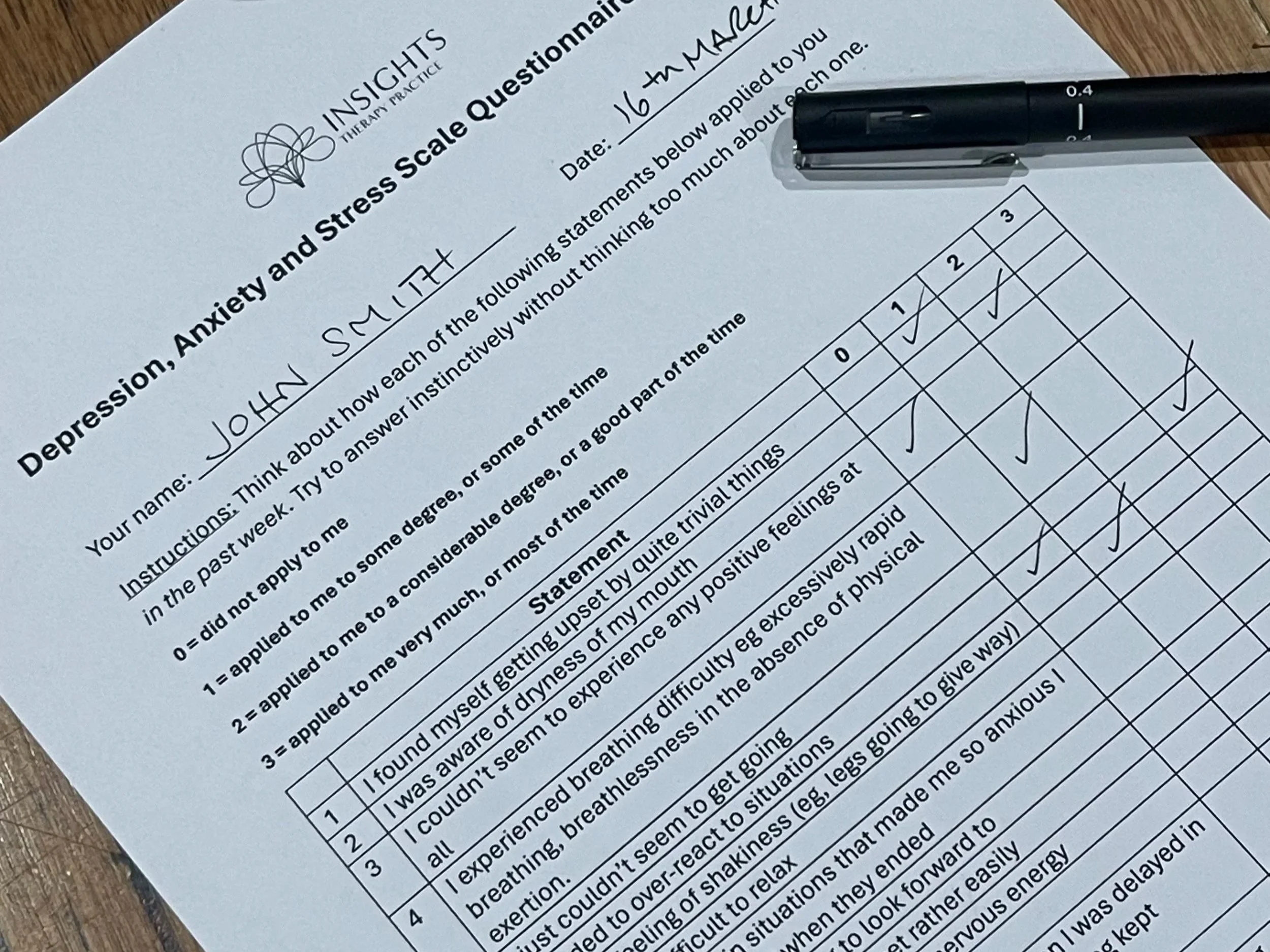
Completing the DASS is a simple process, and it gives us a clear snapshot of where you are at right now with your levels of anxiety, stress, and depression. By re-administering the DASS after some sessions of therapy, we can get a real sense of improvement over time, and where further focus may be needed.